


“Bringing one’s complete attention to the present experience on a moment-to-moment basis” (Marlatt & Kristeller,1999) and as “paying attention in a particular way: on purpose, in the present moment, and non-judgmentally” (Kabat-Zinn, 1994).-Mindfulness Training as a Clinical Intervention: A Conceptual and Empirical Review :Ruth A. Baer, University of Kentucky
"We propose a two-component model of mindfulness. The first component involves the self-regulation of attention so that it is maintained on immediate experience, thereby allowing for increased recognition of mental events in the present moment. The second component involves adopting a particular orientation toward one’s experiences in the present moment, an orientation that is characterized by curiosity, openness, and acceptance."- "Mindfulness: A proposed operational definition [Scott R Bishop, et.,al.,Clin Psychol Sci Prac 11: 230–241, 2004]
"Just as the royal frontier fortress has a gate-keeper — wise, experienced, intelligent — to keep out those he doesn't know and to let in those he does, for the protection of those within and to ward off those without; in the same way a disciple of the noble ones is mindful, highly meticulous, remembering & able to call to mind even things that were done & said long ago. With mindfulness as his gate-keeper...
Therefore in right mindfulness we are being ardent with right effort and alert (with clear comprehension) on the workings of the mind and skillfully removing roots of unwholesomeness. One simile Buddha gave on this was "like a skilled carpenter removing a rusty nail". Therefore there is a certain element of wisdom that has to be in place in the form of right view for right mindfulness. According to the generic definitions of mindfulness stated above, you accept every thought that arises with openness, non-judgmentally. The danger here is you allow any thought that may arise. These could be skillful thoughts or unskillful thoughts such as greed, anger, etc. So we may end up with wrong mindfulness in the wrong path leading to adverse results that may even harm us. Skillful thoughts belong to right intention in the noble eightfold path. Buddha also taught us the importance of abandoning wrong intention (unskillful thoughts) and cultivating the right intention (skillful thoughts) in a sutta based on the two kinds of thoughts.
According to Thanissaro Bhikkhu* "Buddha himself defined sati as the ability to remember, illustrating its function in meditation practice with The Four Satipatthanas (The four foundations of mindfulness/ frames of reference), or establishings of mindfulness.
“And what is the faculty of sati? There is the case where a monk, a disciple of the noble ones, is mindful, highly meticulous, remembering & able to call to mind even things that were done & said long ago. (And here begins the satipatthana formula:) He remains focused on the body in & of itself — ardent, alert, & mindful — putting aside greed & distress with reference to the world. He remains focused on feelings in & of themselves... the mind in & of itself... mental qualities in & of themselves — ardent, alert, & mindful — putting aside greed & distress with reference to the world.”—SN 48:10
If we are within the Four frames of mindfulness we become very skillful in avoiding any danger that causes unhappiness or stress. This is also illustrated in a sutta in the Pali Canon by the buddha in the simile of the quail. The difficulty of being mindful within these four frames is also illustrated in the Canon by the simile of the person who is carrying a bowl of oil. How you train your senses to be mindful of the body is also illustrated in the sutta in the simile of the six animals.
1. Mindfulness of the body - One example is mindfulness of the breath and initially this is the perception of the breath. For example, long breath, short breath, whole body of the breath (breath immersed in the body).
2. Mindfulness of feeling- pleasant, painful and neither-pleasant-nor-painful feeling
3. Mindfulness of mind- these are mainly thoughts/intentions
4. Mindfulness of mental phenomena/ mental qualities/ mental objects- This to me is mainly the mechanism of how the six senses work and is the source or the origin of all perceptions, feelings and thoughts. This is where everything starts and Buddha called this "the all." In practice of right mindfulness according to satipatthana is like stating at a base of a pyramid and climbing up gradually
(working through body perception, feeling, thoughts)
to the pinnacle (mental phenomena) of it. At the pinnacle you see everything. This is insight.
Therefore mindfulness should be defined as
a technique in which a person becomes intentionally aware of his or her perceptions, feelings, thoughts and mental phenomena in the present moment, skillfully.
*Also please listen to this excellent talk called "The Boundaries of Mindfulness" by Thanissaro Bhikkhu which inspired me to write this post. Here is the link:"The Boundaries of Mindfulness"


Then Kesi the horsetrainer went to the Blessed One and, on arrival, having bowed down, sat to one side. As he was sitting there, the Blessed One said to him: "You, Kesi, are a trained man, a trainer of tamable horses. And how do you train a tamable horse?"
"Lord, I train a tamable horse [sometimes] with gentleness, [sometimes] with harshness,[sometimes] with both gentleness & harshness."
"And if a tamable horse does not submit either to a mild training or to a harsh training or to a mild & harsh training, Kesi, what do you do?"
"If a tamable horse does not submit either to a mild training or to a harsh training or to a mild and harsh training, lord, then I kill it.
Why is that? [I think:] 'Don't let this be a disgrace to my lineage of teachers.' But the Blessed One, lord, is the unexcelled trainer of tamable people. How do you train a tamable person?"
"Kesi, I train a tamable person [sometimes] with gentleness, [sometimes] with harshness, [sometimes] with both gentleness & harshness.
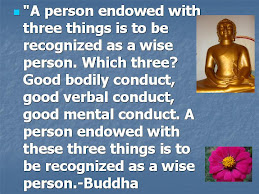
"In using gentleness, [I teach:] 'Such is good bodily conduct. Such is the result of good bodily conduct. Such is good verbal conduct. Such is the result of good verbal conduct. Such is good mental conduct. Such is the result of good mental conduct. Such are the devas. Such are human beings.'
"In using harshness, [I teach:] 'Such is bodily misconduct. Such is the result of bodily misconduct. Such is verbal misconduct. Such is the result of verbal misconduct. Such is mental misconduct. Such is the result of mental misconduct. Such is hell. Such is the animal womb. Such the realm of the hungry shades.'
"In using gentleness & harshness, [I teach:] 'Such is good bodily conduct. Such is the result of good bodily conduct. Such is bodily misconduct. Such is the result of bodily misconduct. Such is good verbal conduct. Such is the result of good verbal conduct. Such is verbal misconduct. Such is the result of verbal misconduct. Such is good mental conduct. Such is the result of good mental conduct. Such is mental miscondut. Such is the result of mental misconduct. Such are the devas. Such are human beings. Such is hell. Such is the animal womb. Such the realm of the hungry shades.'"
"And if a tamable person does not submit either to a mild training or to a harsh training or to a mild & harsh training, what do you do?"
"If a tamable person does not submit either to a mild training or to a harsh training or to a mild & harsh training, then I kill him*, Kesi."
"But it's not proper for our Blessed One to take life! And yet the Blessed One just said, 'I kill him, Kesi.'"
"It is true, Kesi, that it's not proper for a Tathagata to take life. But if a tamable person does not submit either to a mild training or to a harsh training or to a mild & harsh training, then the Tathagata does not regard him as being worth speaking to or admonishing. His knowledgeable fellows in the holy life do not regard him as being worth speaking to or admonishing*. This is what it means to be totally destroyed in the Doctrine & Discipline, when the Tathagata does not regard one as being worth speaking to or admonishing, and one's knowledgeable fellows in the holy life do not regard one as being worth speaking to or admonishing."
"Yes, lord, wouldn't one be totally destroyed if the Tathagata does not regard one as being worth speaking to or admonishing, and one's knowledgeable fellows in the holy life do not regard one as being worth speaking to or admonishing!
"Magnificent, lord! Magnificent! Just as if he were to place upright what was overturned, to reveal what was hidden, to show the way to one who was lost, or to carry a lamp into the dark so that those with eyes could see forms, in the same way has the Blessed One — through many lines of reasoning — made the Dhamma clear. I go to the Blessed One for refuge, to the Dhamma, and to the community of monks. May the Blessed One remember me as a lay follower who has gone to him for refuge, from this day forward, for life."






















 Posts
All Comments
Posts
All Comments


